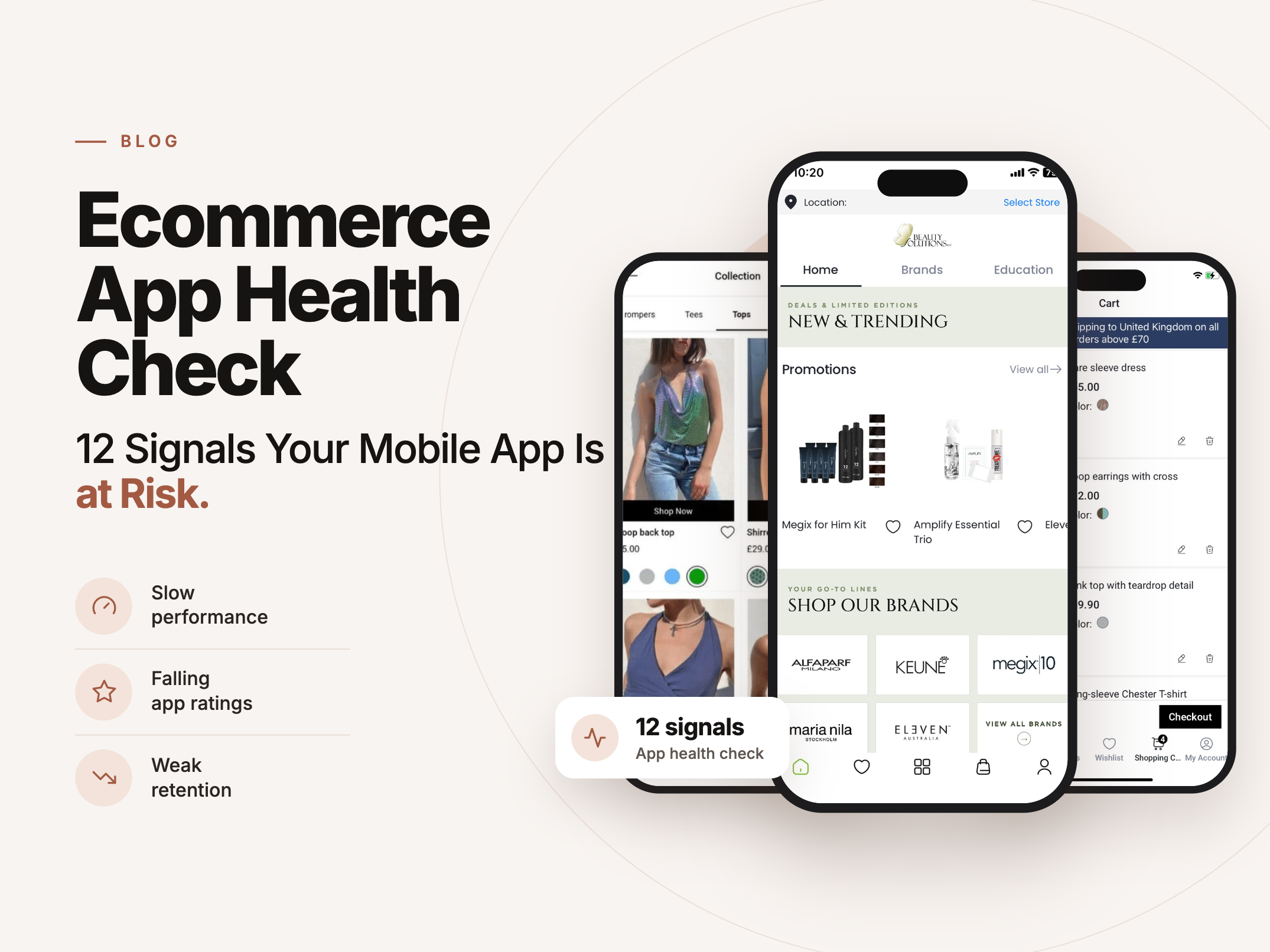

Fashion and beauty do not usually have an awareness problem. They have a repeat purchase problem. Mobile loyalty helps you solve that with a faster, more personal customer journey: a native app, push notifications, real-time rewards, and one customer identity across app, web and store.
That matters because these categories are built on habit, inspiration and timing. Customers browse often, buy repeatedly, respond to drops and replenishment moments, and expect convenience every time. A good mobile loyalty program turns those moments into retention, higher customer lifetime value, and stronger margins.
Why retention in fashion and beauty now depends on mobile
Acquiring a customer is expensive. Keeping one is where profitable growth happens. In fashion and beauty, that is even more true because customers rarely buy once and disappear forever. They come back for new collections, replenishment, seasonal needs, shade changes, gifting, styling, and impulse-driven discovery.
Mobile is where a large part of that behavior already happens. Customers compare products on the go, save favorites, react to launches, open back-in-stock alerts, and browse between other daily tasks. If your loyalty experience still feels like a generic email program with delayed points and broad discounts, you are missing the channel where repeat behavior actually forms and where brands can increase mobile loyalty most effectively.
For many ecommerce brands, the business case is clear. App users often convert 3-3.5x better than mobile site visitors, return around 2x more often, and view up to 4x more products. That typically lifts average order value and customer lifetime value while lowering pressure on paid acquisition. In categories with a high share of returning customers, mobile loyalty is not a nice extra. It is infrastructure. See the Beauty Solutions case study for real-world beauty results that reinforce loyalty program impact.
What strong mobile loyalty looks like in practice
The native app is the loyalty hub
The strongest mobile loyalty programs are built around a native iOS and Android app, not around a basic mobile website popup. The reason is simple: native apps are faster, smoother and always within reach on the home screen. That creates more engagement and more repeat sessions.
For loyalty, a native app gives you far more control over the experience. You can keep customers logged in, show their balance and tier instantly, surface benefits while they browse, and place personalized offers directly in the shopping flow. This is where cart-native loyalty becomes powerful: customers do not just see rewards after checkout, but during discovery, in the product detail page, and in the cart itself.
For fashion, that can mean member-only drops, early access and size-specific alerts, which are common priorities in Mobile apps for fashion retailers. For beauty, it can mean replenishment reminders, routine recommendations, and rewards linked to product discovery in Mobile apps for beauty brands. If a customer already has an ecommerce account, enrollment should feel automatic or one-tap. Friction kills loyalty momentum. What is a cosmetics shopping app? covers the features that support loyalty.
Digital wallet passes, QR codes and store recognition
Not every loyalty touchpoint has to happen inside the app. Apple Wallet and Google Wallet can give customers a fast-access member pass with a barcode or QR code for in-store scanning, event entry or benefit recognition. That is especially useful when speed matters and customers do not want to search through email for a code.
Wallet passes also make omnichannel loyalty more visible. They can support store check-ins, geo-based reminders near a retail location, and instant access to membership status. For beauty brands, that can connect to consultations, sampling or events. For fashion brands, it can support launches, store visits and VIP access. The point is convenience. If recognition takes effort, most customers will not bother.
Real-time omnichannel sync is non-negotiable
Mobile loyalty only works when the customer sees one consistent program everywhere. If someone earns points in store but the app still shows the old balance hours later, trust drops immediately. The same goes for tier benefits that work on web but not in the app, or in the app but not at the POS.
A good setup keeps balances, status, rewards and purchase history synchronized in real time across channels. It should also unify online and offline behavior, so the brand can understand what the customer actually does. In fashion and beauty, that can include store purchases, online orders, favorite categories, consultation history, refill cycles and event participation.
This is why the best programs do not treat mobile as a side channel. They use the app as connective tissue between ecommerce, stores and retention marketing. That is what makes loyalty feel real to the customer instead of administrative.
The loyalty mechanics that create real behavior change
The best mobile loyalty setup is not the one with the most features. It is the one that matches how your customers shop and what your brand can execute well.
- Member-only pricing and early access - Best fit for fashion drops, premium launches, and limited beauty releases because it drives sign-ups and protects margin better than broad sitewide discounting.
- Points and tier progression - Best fit for broad assortments and high-frequency buyers because it creates momentum, status and a clear reason to come back.
- Personalized profiles or quizzes - Best fit for beauty routines, skincare, haircare, and fit- or style-led fashion because it captures zero-party data customers willingly share for better recommendations.
- Challenges and streaks - Best fit for brands with strong browsing frequency and active communities because it keeps the app active between purchases and builds habit.
- Non-purchase rewards - Best fit for refill, recycling, resale, store visits, and engagement-led brands because it rewards valuable actions beyond checkout and deepens the relationship.
- Community and VIP access - Best fit for premium, lifestyle, and identity-driven brands because it adds belonging, exclusivity and experience beyond discounts.
Most brands should start with two or three mechanics, not all of them. A focused program is easier to understand, easier to market and easier to measure, which is why simple tactics to increase mobile loyalty often beat overly complex programs. Gating benefits behind membership is often smarter than giving the same discount to everyone, because it captures first-party data and gives you a reason to keep the customer inside your owned mobile channel.
Personalization is where most loyalty programs win or lose
Many brands collect customer data, but very few activate it well. That is why personalization remains one of the biggest gaps in loyalty. Generic offers and generic push messages do not feel like loyalty. They feel like noise.
Fashion and beauty both have strong personalization potential, but the data points are different. Fashion brands should care about size, fit, category preference, favorite labels, price sensitivity and browsing behavior. Beauty brands should care about skin type, hair goals, shade, concerns, routine stage and replenishment timing. Some of that is first-party data from browsing and purchases. See First-party data from mobile apps for how app data enables personalised rewards and offers. Some is zero-party data, meaning preferences the customer intentionally shares through a profile or quiz.
Once you have that data, use it in the app experience itself. Show relevant collections, restock alerts, tier progress, cross-sell suggestions and next-best actions. Send push messages that are specific to the person, not the whole database. Beauty brands can personalize around routines, discovery and refill cycles. Fashion brands can personalize around launch access, saved sizes and category interest. AI can help with styling and product guidance, but only if your data is current and connected to stock, pricing and customer behavior in real time.
Gamification works, but only when it supports shopping
Gamification is effective in mobile loyalty, but only when it creates useful habits. Bad gamification feels childish. Good gamification makes the app more rewarding to use and gives customers a reason to return between purchases.
That can include challenges, achievements, streaks and progress bars, but the rewarded actions should matter. Complete your profile. Save your size. Join a launch. Scan in store. Unlock early access. Recycle empties. Refill on time. These are all stronger than rewarding random taps.
Beauty brands can use gamified journeys around routines, sampling and product discovery. Fashion brands can use it around drops, community events, store visits and seasonal participation. The principle is the same: make engagement measurable, make the reward clear, and tie the behavior back to revenue, retention or richer customer data.
The tech stack behind mobile loyalty
Integration matters more than reward design
A creative rewards concept will not save a disconnected setup. When the app, loyalty engine, ecommerce platform, CRM and store systems are not connected, customers get delayed balances, irrelevant offers and inconsistent recognition. Teams also end up with slow execution and unclear reporting.
The best mobile loyalty programs run on real-time data and clear ownership. That is what enables personalization, omnichannel consistency and fast campaign testing.
What needs to be connected
Commerce and customer data
Your app should connect to product catalog, pricing, inventory, customer accounts, order history, returns, wishlists and loyalty status. That makes it possible to show benefits in the right place and react instantly to customer behavior.
Store systems and clienteling
If you have physical retail, connect the POS and store workflows too. Staff should be able to recognize members, apply benefits and understand purchase context. In fashion and beauty, service is part of loyalty, not a separate layer.
Campaign channels and measurement
Push should be a core channel because it usually outperforms email and SMS on open rate and costs almost nothing per send. Measure repeat purchase, reactivation, average order value and customer lifetime value, not just installs or redemptions. The goal is profitable retention.
How to launch mobile loyalty without a long custom build
Many brands delay mobile loyalty because they assume an app means a long, risky custom development project. It does not have to. A platform-first approach gives you enterprise-grade native iOS and Android apps, faster launch, lower implementation risk and the flexibility to add custom features where needed.
That is especially relevant in fashion and beauty, where recurring revenue is too important to leave on the table. It also helps explain why fashion and cosmetics brands should launch an app sooner rather than later. Top ecommerce players invest in apps for a reason. A strong app creates better performance than mobile web, better data than paid platforms, and better control over retention than relying on discount emails alone.
JMango360 is built for that model: native ecommerce apps that can launch in weeks, a scalable platform with room for extensions and customizations, a monthly subscription model, and a smooth path from strategy to live app to ongoing optimization. Maintenance is light, and the mobile channel becomes easier to grow instead of harder to manage.
Launch your app with JMango360
We build it. We launch it. We grow it with you.
Book a demo. We'll show you exactly what an app would add to your bottom line.
FAQ about mobile loyalty for fashion and beauty
Do fashion and beauty brands really need a native app for loyalty?
If repeat purchase is important to your business, usually yes. Native apps are faster than mobile sites, support push notifications, keep customers logged in and make personalization easier. They are especially valuable for brands with launches, replenishment cycles, strong returning-customer share or store traffic.
What are the best loyalty rewards for beauty brands and retailers?
The most effective beauty rewards usually combine value and relevance: early access, personalized offers, samples, routine-based rewards, refill reminders and VIP services. Beauty customers respond well when the reward also improves discovery and guidance, not just price.
What is cart-native loyalty?
Cart-native loyalty means customers can see points, benefits, tier progress and redemption options while they browse and build their basket, not only after checkout. On mobile, that increases visibility and makes loyalty part of the shopping journey instead of an afterthought.
How do digital wallet passes improve mobile loyalty?
They remove friction. A wallet pass gives customers one-tap access to their membership, barcode or QR code, and can support in-store recognition, event entry and location-based reminders. It is a fast way to make loyalty usable beyond the app itself.
What are the 5 pillars of brand loyalty in mobile?
- Convenience - fast access, saved login and simple redemption
- Value - rewards that feel worth coming back for
- Recognition - visible status and consistent treatment across channels
- Personalization - relevant offers, products and timing
- Consistency - one program experience in app, web and store
Can you launch an app-based loyalty program without a large development team?
Yes. With a proven native app platform and the right integrations, brands can launch in weeks instead of spending months on a full custom build. That lowers cost, reduces implementation risk and still leaves room for custom extensions where they add real value.
What data should you collect first for mobile loyalty?
Start with the basics that directly improve relevance: account identity, purchase history, notification opt-in, favorite categories, store preference, and fit or routine data such as size, skin type or hair goals. Collect more only when you can actually use it.